Making the Right Choice for Your Workplace
When upgrading your Chicago office's break room, you will likely encounter two main options: traditional vending machines and the newer concept of micro-markets. Both are excellent choices, but they serve different needs. The right answer depends on your space, your headcount, and what your employees actually want.
I have helped dozens of Chicago businesses make this decision, and the process does not have to be complicated. In this guide, I will walk you through exactly what each option looks like, the real pros and cons of each, and a simple decision framework you can use to figure out which one fits your workplace.
What Is a Micro-Market?
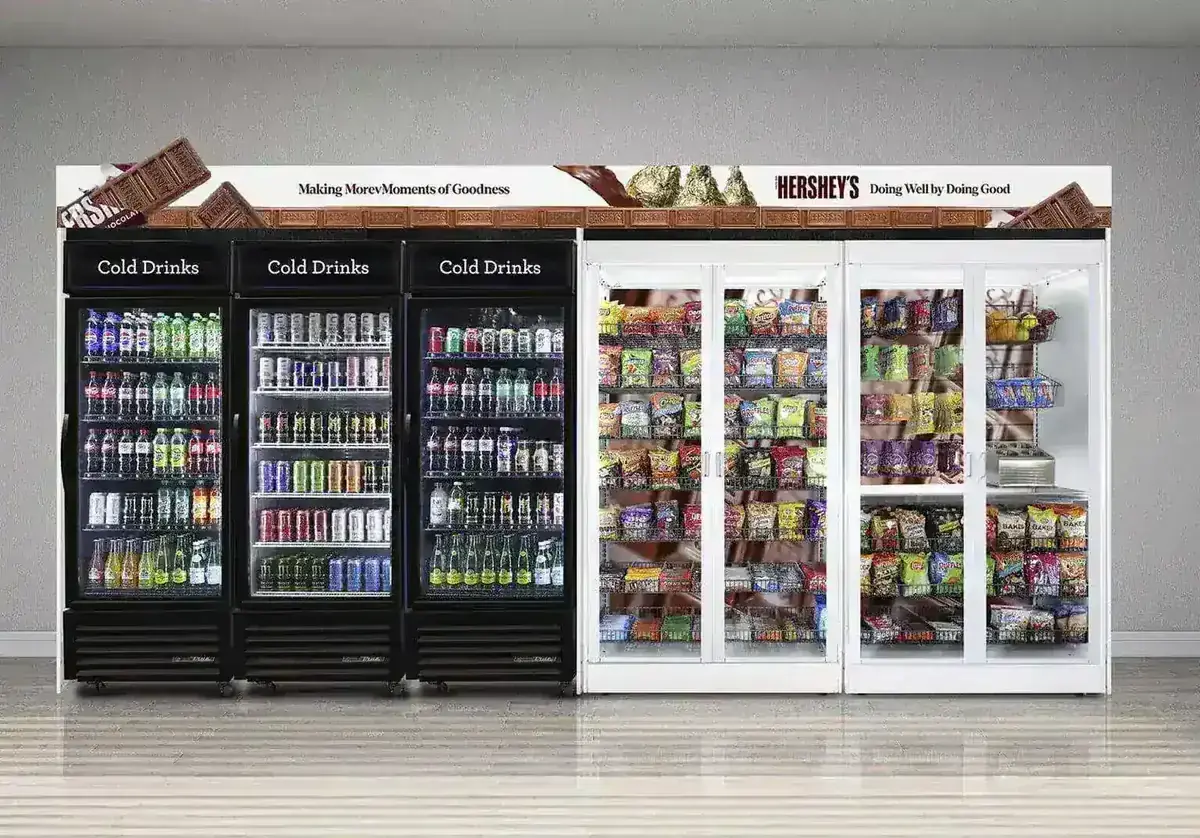
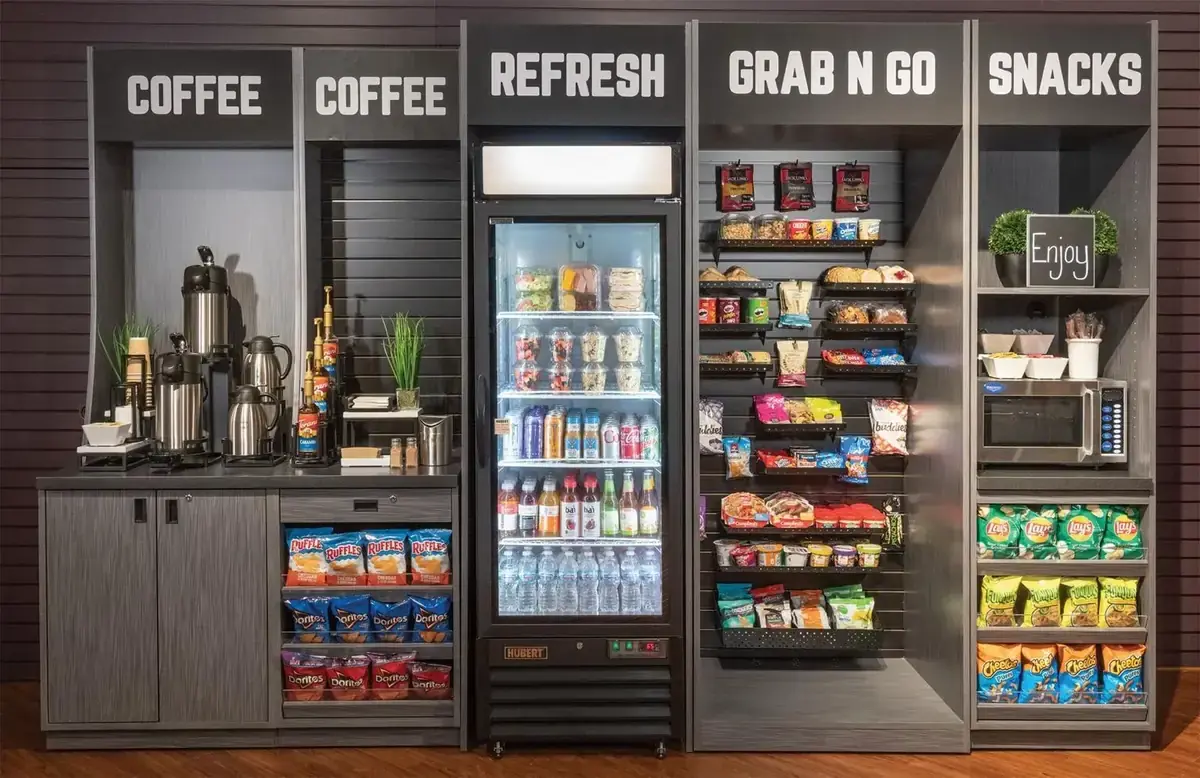
A micro-market is essentially a small self-service convenience store installed directly in your workplace. Think of it like a miniature 7-Eleven in your break room, minus the cashier. Unlike vending machines where products are behind glass, micro-markets feature:
- Open display shelving you can browse freely, just like a regular store
- Commercial refrigerators and freezers for fresh and frozen items
- Self-checkout kiosks with touchscreens (no cashier needed)
- 200+ product options (vs. 30-40 in traditional vending)
- Fresh food, salads, sandwiches, and grab-and-go meals
- Snack racks, candy shelves, and impulse-buy displays
- Coffee stations integrated into the market area
The experience is completely different from a vending machine. Employees walk up, browse the shelves, pick up what they want, scan it at the kiosk, and pay with a card or mobile wallet. It feels like shopping at a convenience store, not feeding coins into a machine.
What Is a Traditional Vending Machine?
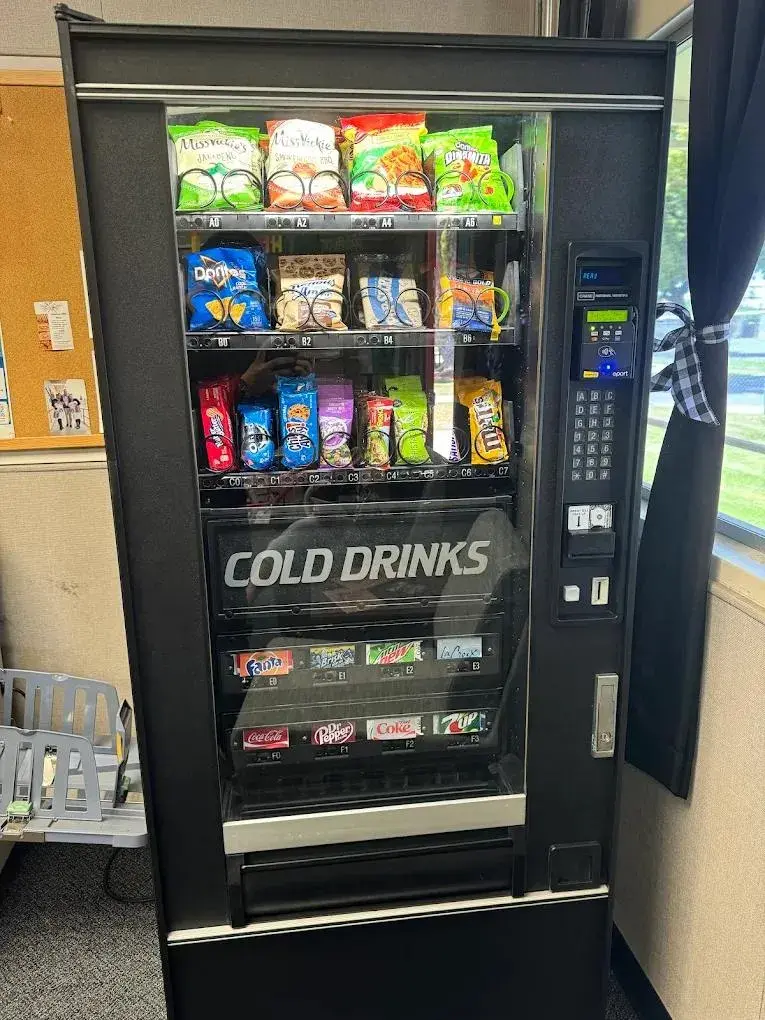
Most people are familiar with vending machines, but modern units are a significant upgrade from what you remember. Today's commercial vending machines feature cashless payment (Apple Pay, Google Pay, tap-to-pay cards), LED lighting, energy-efficient cooling, and guaranteed vend technology that detects jams and auto-refunds. For a deeper look at every type of vending machine available, see our complete guide. They are compact, reliable, and work well in nearly any environment.
Traditional Vending Machine: Full Pros and Cons
Pros:
- Small footprint. A single machine takes up about 10-20 square feet. Even a pair of machines (snack + beverage) fits comfortably in a hallway alcove or break room corner.
- Low headcount requirement. Vending machines work well for locations with as few as 25-30 employees. The economics are simpler.
- Fast installation. A machine can be delivered, placed, stocked, and operational in a single visit, usually within a few hours.
- Works in semi-public areas. Lobbies, shared hallways, multi-tenant buildings, warehouses. Vending machines are enclosed and secure, so they work well in spaces where not everyone is a trusted employee.
- 24/7 unmanned access. No staff required. The machine handles payment, vending, and even refunds automatically.
- Lower risk of theft. Products are locked behind glass. Employees pay before they receive anything.
- Easy to relocate. If your office moves floors or buildings, the machine can move with you.
Cons:
- Limited product variety. A typical combo machine holds 30-45 different items. That covers the basics, but you will not have the range of a convenience store.
- No fresh food. While some specialized machines offer refrigerated items, traditional vending is best for packaged snacks, chips, candy, and bottled beverages.
- Less "premium" feel. A vending machine is functional and convenient, but it does not create the same break room experience as a market setup.
- Fixed slot sizes. Certain products may not fit in standard vending coils, limiting what you can offer.
Micro-Market: Full Pros and Cons
Pros:
- Massive product variety. According to NAMA, micro-markets are the fastest-growing segment in the convenience services industry, with the number of micro-market locations increasing year over year. A typical micro-market carries 200-500 items across categories: fresh food, frozen meals, snacks, beverages, coffee, candy, and even personal care items.
- Fresh food and real meals. Salads, sandwiches, wraps, yogurt parfaits, fruit cups. Employees can eat a real lunch without leaving the building.
- Premium break room experience. A well-designed micro-market transforms your break room from a forgettable space into a destination. Employees actually want to spend time there.
- Supports all dietary needs. With hundreds of slots to fill, you can easily stock vegan, gluten-free, keto, halal, kosher, and allergen-free options alongside traditional favorites.
- Self-service convenience. Employees browse, pick up items, and check out on their own schedule. No waiting for a vend cycle.
- Higher employee satisfaction. Micro-markets consistently receive positive feedback from employees because they offer choice and a better experience. The International Food Information Council (IFIC) reports that a majority of consumers actively consider variety and healthfulness when choosing where to buy food, which explains why micro-markets outperform traditional vending in satisfaction surveys.
- Impulse-friendly layout. Open shelving and attractive displays encourage employees to discover new products.
Cons:
- Requires more space. A micro-market typically needs 100-300 square feet of dedicated break room space. Not every office has that available.
- Higher headcount needed. Micro-markets generally require 75+ employees to generate enough sales volume to justify the setup and ongoing service.
- Longer installation. Setting up shelving, refrigerators, freezers, and checkout kiosks takes 3-5 business days.
- Relies on trust. Since products are out in the open, there is some risk of theft or "shrinkage." Most workplaces have minimal issues, but it is worth considering for your environment.
- Not ideal for public areas. Micro-markets work best in secured break rooms where access is limited to employees. They are not suited for building lobbies or high-traffic public spaces.
The Complete Side-by-Side Comparison
| Feature | Vending Machines | Micro-Markets |
|---|---|---|
| Space Needed | 10-20 sq ft per machine | 100-300 sq ft |
| Products Available | 30-45 items per machine | 200-500 items |
| Fresh Food | Very limited (packaged only) | Extensive (salads, sandwiches, meals) |
| Frozen Food | Not typically available | Available with freezer unit |
| Best Employee Count | 25-100 | 75-500+ |
| Installation Time | Same day (a few hours) | 3-5 business days |
| Cost to Business | FREE | FREE |
| Payment Methods | Cashless + optional cash | Cashless (kiosk-based) |
| Security | Enclosed (products behind glass) | Open shelving (trust-based) |
| Theft Risk | Very low | Low (but possible) |
| Ideal Location | Break room, hallway, lobby, warehouse | Secured break room only |
| Maintenance | Minimal (provider handles) | More involved (provider handles) |
| Product Rotation | Provider adjusts based on sales | Provider adjusts based on sales |
| Customization | Choose products within machine limits | Highly customizable layout and selection |
| Employee Experience | Functional and convenient | Premium, store-like experience |
| Coffee Options | Separate coffee vending machine | Can include built-in coffee station |
| Restocking Frequency | Weekly or bi-weekly | Weekly (fresh food may be more frequent) |
The Decision Framework
Here is a simple checklist to help you decide. Run through these questions honestly, and the right answer will become clear.
Choose traditional vending machines if:
- You have fewer than 75 employees at the location
- Your break room is on the smaller side (under 100 sq ft available)
- You primarily need snacks and beverages, not full meals
- Your break room is in a semi-public or shared area
- You want the fastest possible installation
- You have multiple floors or buildings and want a machine on each
- Security is a concern (public-facing location, high turnover workforce)
- You want to start simple and potentially upgrade later
Choose a micro-market if:
- You have 75 or more employees at the location
- You have a dedicated break room with 100+ square feet of available space
- Employees have asked for fresh food, meal options, or more variety
- Employee wellness and satisfaction are strategic priorities for your organization
- Your break room is in a secured, employee-only area
- You want to create a break room that people actually enjoy spending time in
- Your team has diverse dietary needs (vegan, gluten-free, kosher, halal, etc.)
- You are competing for talent and want your workplace to stand out
The Hybrid Approach: Why Not Both?
Here is something many businesses do not realize: you do not have to pick just one. A hybrid approach combines the best of both worlds, and it is more common than you might think.
I saw this play out firsthand with a marketing agency in the West Loop. They had around 80 employees and started with a single combo machine. It was a good fit at first. People grabbed snacks and drinks between meetings, and the machine stayed busy. But about six months in, the office manager reached out and asked me about upgrading to a micro-market. Her team had been asking for fresh food options, things like salads and sandwiches they could grab for lunch without leaving the building. We did a walkthrough of their break room, measured the space, and put together a micro-market layout that fit perfectly. Once we installed it, the break area completely transformed. It went from a room people walked through to a place where people actually sat down, ate lunch together, and took real breaks. The agency ended up using it as a selling point when recruiting new hires. That progression, starting with a vending machine and growing into a micro-market as needs evolved, is one of the most natural paths I see with Chicago businesses.
Grand View Research projects that the global micro-market segment will continue its strong growth trajectory, driven by increasing demand for convenient, self-service food options in workplaces.
How a hybrid setup works:
- Install a micro-market in your main break room for the full fresh food and variety experience
- Place traditional vending machines in secondary locations (other floors, warehouse areas, near the loading dock, by the entrance)
- This way, every employee has convenient access regardless of where they work in the building
When hybrid makes sense:
- Large facilities with multiple break areas or buildings
- Companies with both office and warehouse/production staff
- Multi-floor offices where employees on upper floors want something nearby
- Organizations with a main campus and satellite locations
The cost to you is the same either way: zero. The vending provider stocks and maintains everything, whether you have one machine or a full micro-market plus three satellite vending machines.
What Does Installation Look Like?
Vending Machine Installation:
The process is straightforward. We show up with the machine on a delivery truck, roll it into position, plug it into a standard outlet, stock it, and test it. The whole thing takes a couple of hours. You need a level floor, a dedicated electrical outlet within six feet, and enough door clearance to get the machine through.
Micro-Market Installation:
This is more involved but still not disruptive. We typically schedule a walkthrough first to measure the space and plan the layout. Then our team arrives with shelving units, refrigerators, a freezer (if needed), and the self-checkout kiosk. We assemble everything, stock it, calibrate the kiosk, and test the system. The process takes 3-5 business days, and we work around your schedule to minimize disruption to your team.
Common Questions from Chicago Businesses
"Can we switch from vending to a micro-market later?"
Absolutely. Many businesses start with a vending machine, see how their team responds, and then upgrade to a micro-market as they grow. There is no penalty for switching.
"What about theft in a micro-market?"
Most workplaces see very little shrinkage. The self-checkout kiosk has a camera, and when employees know the system is honor-based, they tend to respect it. In our experience, shrinkage rates in office environments are typically very low.
"Who cleans and maintains the micro-market?"
We do. Our team visits regularly to restock products, rotate inventory, clean shelves and refrigerators, and make sure the kiosk is working properly. You do not need to assign anyone on your staff to manage it.
"What if our employee count changes?"
If your team shrinks significantly and the micro-market is no longer generating enough volume, we will work with you to adjust. That might mean scaling down to a smaller market layout or transitioning to vending machines. Flexibility is the whole point.
Both Options Are FREE with Fast Fuel
Here is the best news for Chicago businesses: whether you choose vending machines, a micro-market, or a hybrid setup, Fast Fuel Vending provides everything at zero cost. We handle installation, stocking, maintenance, and service. You provide the space and the outlet. We handle the rest. Want to learn more about how the free model works? See our guide on why free vending machines are a smart choice.
Not sure which is right for your space? Call us at (321) 316-0416 for a free consultation. We will visit your location, walk through your break room, and recommend the best solution for your team and your space.