Vending Machines vs. Other Workplace Food Options Compared
When it comes to feeding your team, you have more options than ever. Research from the Society for Human Resource Management (SHRM) consistently shows that workplace food and beverage benefits are among the top perks employees value when evaluating an employer. Free vending, office pantry services, catered lunches, snack subscriptions, micro-markets, and DIY break room setups all compete for your attention. Each approach has real trade-offs in cost, convenience, employee satisfaction, and management overhead.
This guide gives you an honest comparison of every major workplace food option, including what each one actually costs, who it works best for, and how to combine approaches for the best results. I also cover the specific products that perform best in each format, because the right food in the wrong format is just as bad as no food at all.
The Full Landscape of Workplace Food Options
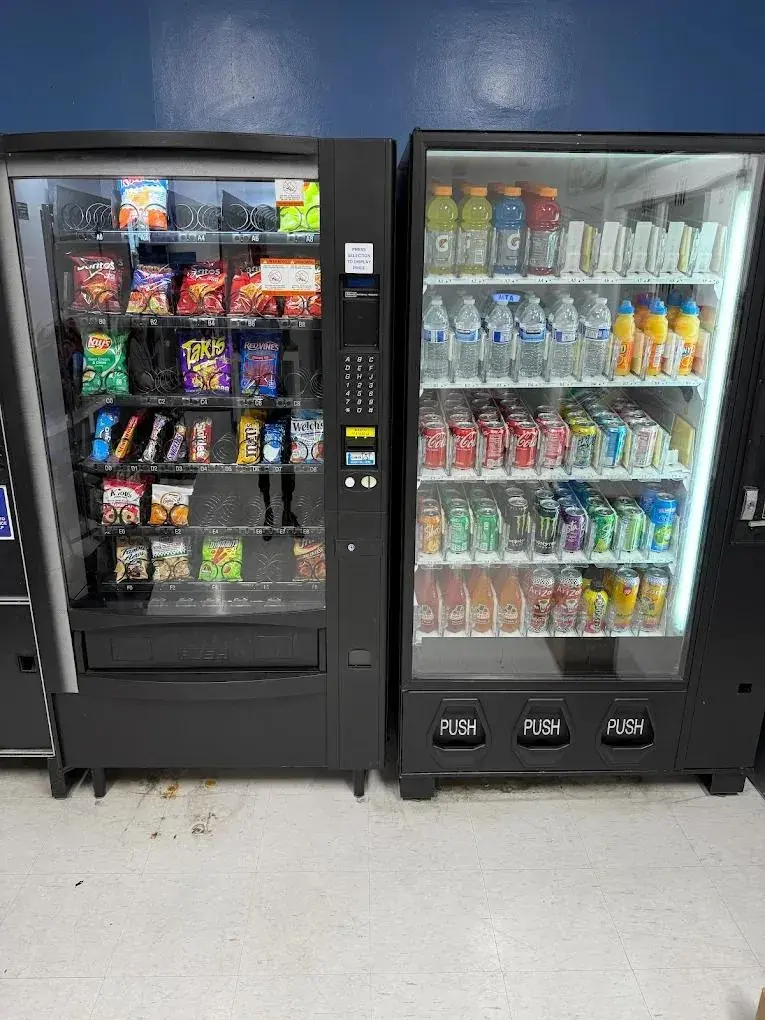
Option 1: Free Full-Service Vending
How it works: A provider installs, stocks, and maintains vending machines at zero cost to you. Employees pay for individual items at the machine.
| Factor | Details |
|---|---|
| Cost to employer | $0 |
| Cost to employees | $1.25 to $3.50 per item |
| Product variety | 30 to 40 items per machine |
| Fresh food available | Limited (specialized machines) |
| Management required | None |
| Best for | Any size business wanting zero-hassle refreshments |
Option 2: Office Pantry Service
How it works: A service delivers snacks and beverages that are free for employees to take. The employer pays a monthly fee or per-item cost.
| Factor | Details |
|---|---|
| Cost to employer | $200 to $2,000+/month depending on team size |
| Cost to employees | Free |
| Product variety | Limited by budget |
| Fresh food available | Depends on service level |
| Management required | Light (coordinating deliveries, managing waste) |
| Best for | Companies with budget for perks, wanting "free food" culture |
Option 3: Catered Lunches
How it works: The company orders catered meals for the team, typically on set days.
| Factor | Details |
|---|---|
| Cost to employer | $10 to $25 per person per meal |
| Cost to employees | Free |
| Product variety | Varies by caterer |
| Fresh food available | Yes, full meals |
| Management required | Moderate (ordering, dietary needs, logistics) |
| Best for | Companies with generous food budgets, team culture events |
Option 4: Snack Box Subscriptions
How it works: Monthly boxes of curated snacks delivered to the office.
| Factor | Details |
|---|---|
| Cost to employer | $100 to $500/month |
| Cost to employees | Free |
| Product variety | 20 to 40 unique items per delivery |
| Fresh food available | No (shelf-stable only) |
| Management required | Minimal (unpacking boxes) |
| Best for | Small teams wanting variety without vending infrastructure |
The Real Cost Analysis
Let us look at what each option actually costs for a 50-person office over 12 months.
Annual Cost Comparison (50-person office):
| Option | Monthly Cost | Annual Cost | Per Employee/Year |
|---|---|---|---|
| Free vending | $0 | $0 | $0 |
| Basic pantry | $600 | $7,200 | $144 |
| Premium pantry | $1,500 | $18,000 | $360 |
| Weekly catered lunch | $2,500 | $30,000 | $600 |
| Daily catered lunch | $10,000 | $120,000 | $2,400 |
| Snack box subscription | $300 | $3,600 | $72 |
The spread is enormous. Free vending costs you literally nothing. Daily catered lunches for 50 people can exceed $100,000 annually. Bureau of Labor Statistics data on employer costs for employee compensation shows that benefits and perks represent a significant portion of total compensation, making zero-cost options like free vending particularly attractive. Most businesses fall somewhere in between, and many combine multiple options to balance cost with employee satisfaction.
When Each Option Makes the Most Sense
Free Vending Is Right When:
- Your budget for workplace food is zero or very limited
- You have 25+ employees (the minimum for most vending providers)
- You want 24/7 availability without managing anything
- You want variety without the cost of stocking a pantry
- Your team works multiple shifts
Office Pantry Is Right When:
- Your budget allows $200 to $2,000/month and you want "free food" as a perk
- Free food is important for your company culture or recruiting
- You have a smaller team (under 30) where vending volume might be low
- You want to control exactly what is available
- Snacks and basic beverages are sufficient (no need for full meals)
Catered Lunches Are Right When:
- You have the budget ($10 to $25 per person per meal)
- Team meals are part of your culture (weekly all-hands, Friday lunches)
- You want to use food as a specific team-building tool
- Occasional (1 to 2 times per week) rather than daily keeps costs manageable
Snack Box Subscriptions Are Right When:
- You have a small team (under 20) where vending does not make logistical sense
- You want curated, trendy snack options
- Management overhead needs to be near zero
- Budget is modest ($100 to $500/month)
The Hybrid Approach: Best of Multiple Worlds
The smartest companies do not pick just one option. They combine them strategically.
The Most Common Hybrid Setup:
- Free vending machines (base layer, zero cost, always available)
- Plus employer-provided coffee and water (basic pantry element)
- Plus occasional catered lunches (1 to 2 times per month for team building)
This combination costs a fraction of a full pantry service while delivering a strong employee experience. Vending handles the day-to-day snack and beverage needs at no cost. The employer provides the universal basics (coffee and water). And periodic catered meals create team moments without the budget strain of daily service.
Premium Hybrid Setup (for companies investing in culture):
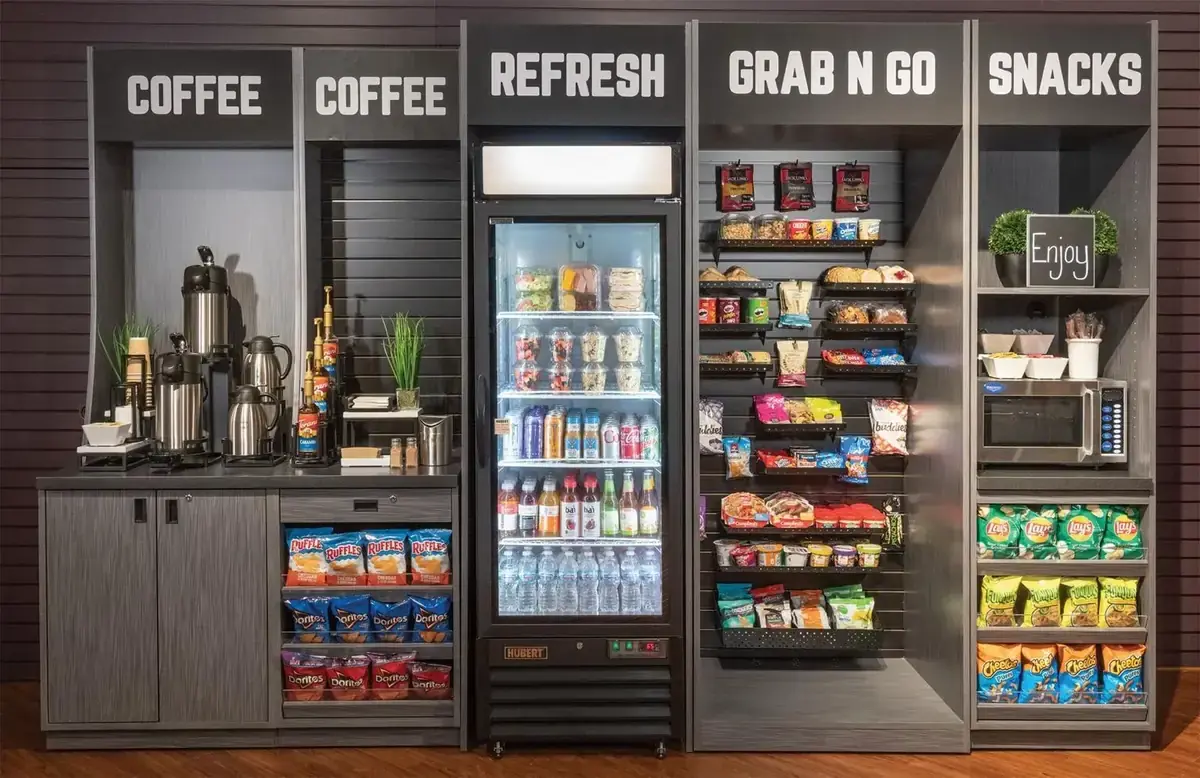
- Micro-market (free, replaces vending, more variety)
- Plus basic pantry staples (coffee, tea, milk, fruit)
- Plus weekly catered lunch (Fridays)
- Estimated monthly cost for 50 people: $3,000 to $4,000 (vs. $10,000+ for daily catering)
Healthy Vending: The Product Deep Dive
Whether you go with vending, a micro-market, or a pantry, healthy product selection is increasingly expected by employees. The International Food Information Council (IFIC) reports that over 70% of consumers actively seek healthier food options in their daily purchasing decisions, and the workplace is no exception. Here is what actually sells in workplace healthy vending across our Chicago machines.
Top-Selling Healthy Snacks (ranked by volume):
1. KIND bars (Dark Chocolate Nuts & Sea Salt is the number one seller almost everywhere)
2. RXBar (Chocolate Sea Salt and Peanut Butter)
3. Quest bars (Cookies & Cream, Chocolate Chip Cookie Dough)
4. Individual nut packs (almonds, cashews, mixed nuts)
5. Baked chips (Popcorners, Baked Lay's)
6. Clif bars (Chocolate Chip, Crunchy Peanut Butter)
7. Veggie Straws and lighter chip alternatives
Top-Selling Healthy Beverages:
1. Water (always number one overall)
2. LaCroix and Topo Chico (sparkling water is enormous)
3. Celsius (the fastest-growing energy drink in our machines)
4. Bai beverages (low calorie, antioxidant-infused)
5. Vitamin Water Zero
6. Unsweetened iced tea
How Much Healthy Should You Stock?
I recommend starting with a 50/50 split between healthier options and traditional favorites. The data will tell you where your location falls. Some offices push 70% healthy. Others gravitate 70% toward traditional comfort snacks. There is no wrong answer as long as you are giving people choices.
Making the Decision: A Simple Framework
If you are stuck deciding which approach to use, answer these three questions:
1. What is your monthly budget for workplace food?
- $0: Free vending. Done.
- $200 to $500: Free vending plus basic coffee/water pantry
- $500 to $2,000: Free vending or micro-market plus pantry elements
- $2,000+: Hybrid approach with catering component
2. How many employees do you have?
- Under 20: Snack box or basic pantry
- 20 to 50: Combo vending machine plus pantry basics
- 50 to 100: Full vending setup (snack and beverage machines)
- 100+: Micro-market consideration plus supplementary vending
3. What does your team actually want?
Ask them. A 30-second survey will tell you more than any guide can. "Would you rather have free snacks with limited selection, or a vending machine with wide variety where you pay per item?" The answer is often split, which is why hybrid approaches work so well.
What Actually Drives Employee Satisfaction with Workplace Food
After working with dozens of Chicago businesses, I have noticed a pattern. Employee satisfaction with workplace food is not primarily about the food itself. It is about three things: variety, convenience, and reliability. Our break room ideas guide covers how to design a space that delivers on all three.
Variety: People want choices. Even a generous pantry service with 15 items gets boring after a month. Vending machines with 30 to 40 options per machine, or a micro-market with 200+ items, keep the selection interesting enough that people stay engaged.
Convenience: The easier it is to get a snack or drink, the more people use it. Every barrier reduces usage. Having to walk to a different floor? Usage drops. Machine only takes cash? Usage drops. Products frequently sold out? Usage drops. Remove friction and usage goes up.
Reliability: This is the one most companies overlook. If the pantry runs out of the good snacks by Tuesday, people stop relying on it. If the vending machine jams regularly, people stop using it. Consistency of experience matters more than the peak experience. A machine that reliably has what you want at 3 PM every day builds trust and habitual usage.
Real-World Examples from Chicago Businesses
Example 1: The Tech Startup (40 employees, West Loop)
They started with a premium pantry service at $1,200/month. After six months, the office manager noticed that half the snacks were being taken home by a few people, and the rest of the team was frustrated because the good items were always gone by Wednesday. They switched to free vending plus employer-provided coffee and sparkling water. Monthly cost dropped from $1,200 to about $200 (just the coffee and water). Satisfaction actually went up because the vending machine was always stocked and available.
Example 2: The Law Firm (75 employees, Loop)
They wanted to project a premium image. We installed a micro-market with fresh food, a bean-to-cup coffee machine, and a curated selection of premium snacks and beverages. The firm also brings in catered lunch every Friday. Total monthly food spend: about $3,500. But the micro-market is free. The catered lunches are $2,500/month. And the coffee service is about $1,000/month. They get a world-class break room experience for a fraction of what a daily pantry service would cost.
Example 3: The Distribution Center (150 employees, three shifts, Schaumburg)
Three shifts means the break room is active around the clock. An office pantry would be impossible to manage, and catering makes no sense for rotating shifts. We installed five vending machines across the facility plus a micro-market in the main break room. Total cost to the company: $0. The workers have 24/7 access to snacks, drinks, fresh food, and energy products on every shift.
Start with Zero Cost, Build from There
My recommendation for any business that does not currently have a vending solution: start with free vending. It costs nothing, it provides immediate value, and it gives you a baseline to build on. You can always add a pantry service or catering later. But starting with a zero-cost foundation means you are never spending money you do not need to.
Call (321) 316-0416 to get free vending installed as the foundation of your workplace food program. We will help you figure out the right combination for your team and budget.