Micro-Market Setup: Complete Guide for Chicago Businesses
A micro-market transforms a standard break room into a self-service convenience store, and it is the biggest upgrade available in workplace refreshments today. Grand View Research reports that the micro-market segment is one of the fastest-growing areas in the vending and office coffee service industry, with double-digit annual growth projected through the late 2020s. If you have the space and the headcount, a micro-market delivers an experience that traditional vending simply cannot match: open shelving you can browse freely, fresh food options, 200+ product choices, and a self-checkout kiosk that makes the whole thing feel modern and effortless.
This guide covers everything about micro-market setup: who it is right for, what the space and electrical requirements look like, how the installation process works from consultation to launch, what products go into a well-run micro-market, and how to integrate coffee service into the same space. I have built micro-markets for offices, corporate campuses, and large residential buildings across Chicago, and this is everything I have learned.
What Exactly Is a Micro-Market?
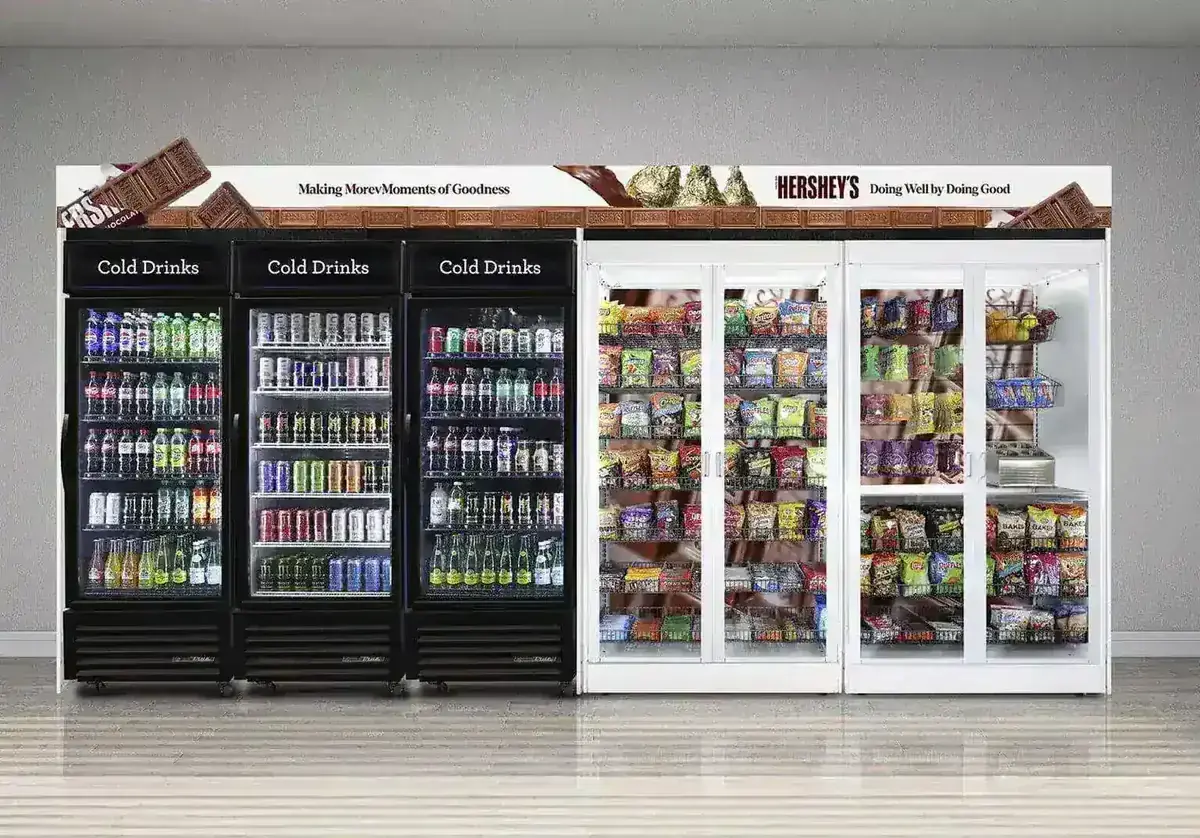
A micro-market is an unattended retail space installed inside your building. Unlike a vending machine where products are behind glass, a micro-market uses open shelving, refrigerated display cases, and a self-checkout kiosk. Employees walk up, browse products just like they would at a convenience store, grab what they want, and scan items at the kiosk to pay with a card or phone.
Core Components:
- Open display shelving for ambient snacks, chips, bars, and packaged goods
- Glass-front refrigerators for cold drinks, salads, sandwiches, yogurt, and fresh food
- Freezer units (optional) for frozen meals, ice cream, and frozen snacks
- Self-checkout kiosk with touchscreen, barcode scanner, and card/mobile payment
- Security cameras for loss prevention monitoring
- Branding and signage that makes the space feel like a real market
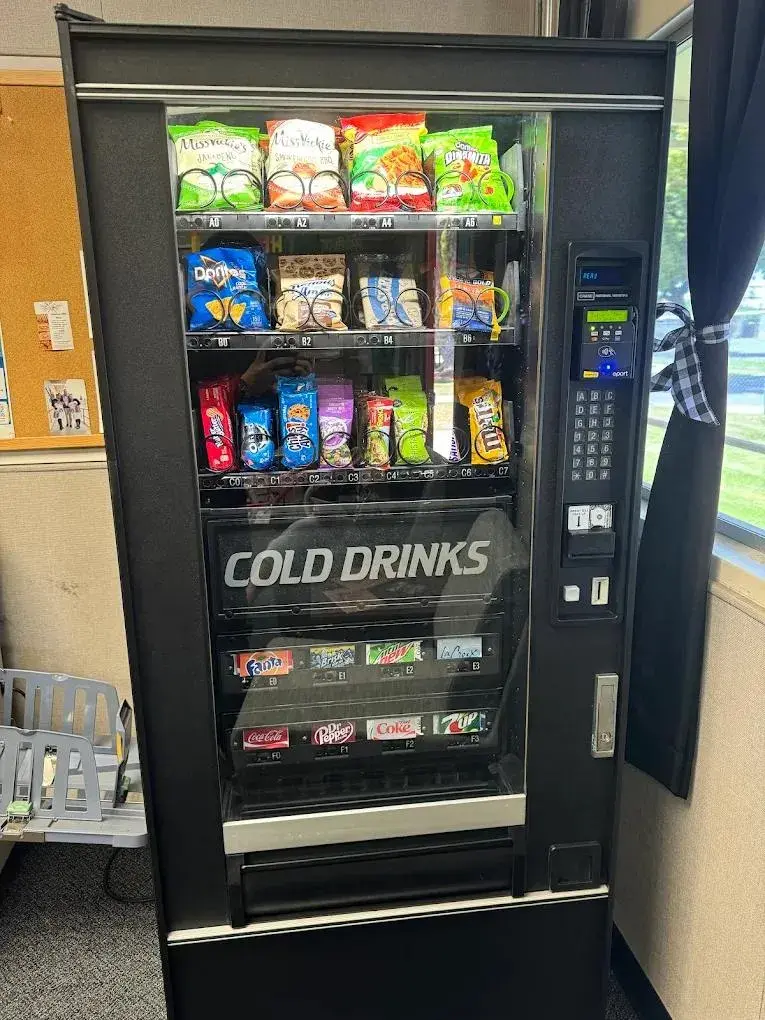
The Experience Difference: The gap between a vending machine and a micro-market is massive. Vending machines dispense products through a slot. Micro-markets let people pick up items, read labels, compare options, and shop at their own pace. For a detailed comparison of both options, see our guide on micro-markets vs. vending machines. The satisfaction scores are consistently higher because it feels like a perk, not a machine.
Is a Micro-Market Right for Your Location?
Micro-markets are not right for every workplace. Here is an honest assessment of whether it makes sense for yours.
Ideal Candidates:
- 75+ employees (100+ is the sweet spot for volume)
- Available space of 100 to 300+ square feet in or near the break room
- Interest in fresh food and meal options, not just snacks
- Desire to make the break room a genuine amenity
- Multiple shifts or extended hours (micro-markets shine when they are available 24/7)
Consider Traditional Vending Instead If:
- Fewer than 50 employees
- Very limited space (under 80 square feet)
- Public access is a concern (micro-markets work best in controlled environments)
- You want the simplest possible setup
The Space Question:
| Available Space | What You Can Build |
|---|---|
| 80-100 sq ft | Minimal micro-market (1 cooler, 1 shelf unit, kiosk) |
| 100-200 sq ft | Standard micro-market (2 coolers, shelving, kiosk) |
| 200-300 sq ft | Full micro-market with fresh food, freezer, and coffee station |
| 300+ sq ft | Premium market with expanded selection and seating nearby |
The Setup Process: From Consultation to Launch
Here is exactly what happens when you decide to move forward with a micro-market.
Phase 1: Consultation and Site Assessment (Week 1)
We visit your location to evaluate the space. This is hands-on: measuring dimensions, checking electrical capacity, assessing lighting, noting doorway widths for equipment delivery, and discussing your vision for the space. We also talk about employee count, shift patterns, and product preferences.
During this visit, I usually take photos and sketch a preliminary layout right there. I want you to see what your micro-market will look like before we order a single piece of equipment.
Phase 2: Design and Planning (Weeks 2-3)
Based on the site assessment, we create a custom layout showing exactly where each piece of equipment goes. This includes cooler placement, shelf positioning, kiosk location, traffic flow patterns, and electrical requirements.
We also finalize the initial product selection during this phase. For the opening, I typically recommend a broad selection to see what sticks, then narrow and optimize based on the first 30 days of sales data.
Electrical Requirements:
- Minimum: One dedicated 20-amp circuit for the primary cooler and kiosk
- Standard: Two dedicated circuits (one for refrigeration, one for kiosk and lighting)
- Larger markets: Three circuits may be needed if you add a freezer unit
- All standard 120V, nothing exotic or expensive to install
Phase 3: Installation (Week 4)
Equipment delivery and installation typically takes one full day. Our team handles everything: moving equipment in, placing and leveling fixtures, running power connections, installing the kiosk, setting up security cameras, stocking all products, and testing every system.
Phase 4: Launch (Week 5)
The market opens. We usually do a brief walkthrough with your office manager or HR team to show them how everything works. Many clients send an email to employees announcing the new micro-market. First-week traffic is always high because people are curious, and that initial enthusiasm usually sustains because the experience genuinely delivers.
Coffee Integration
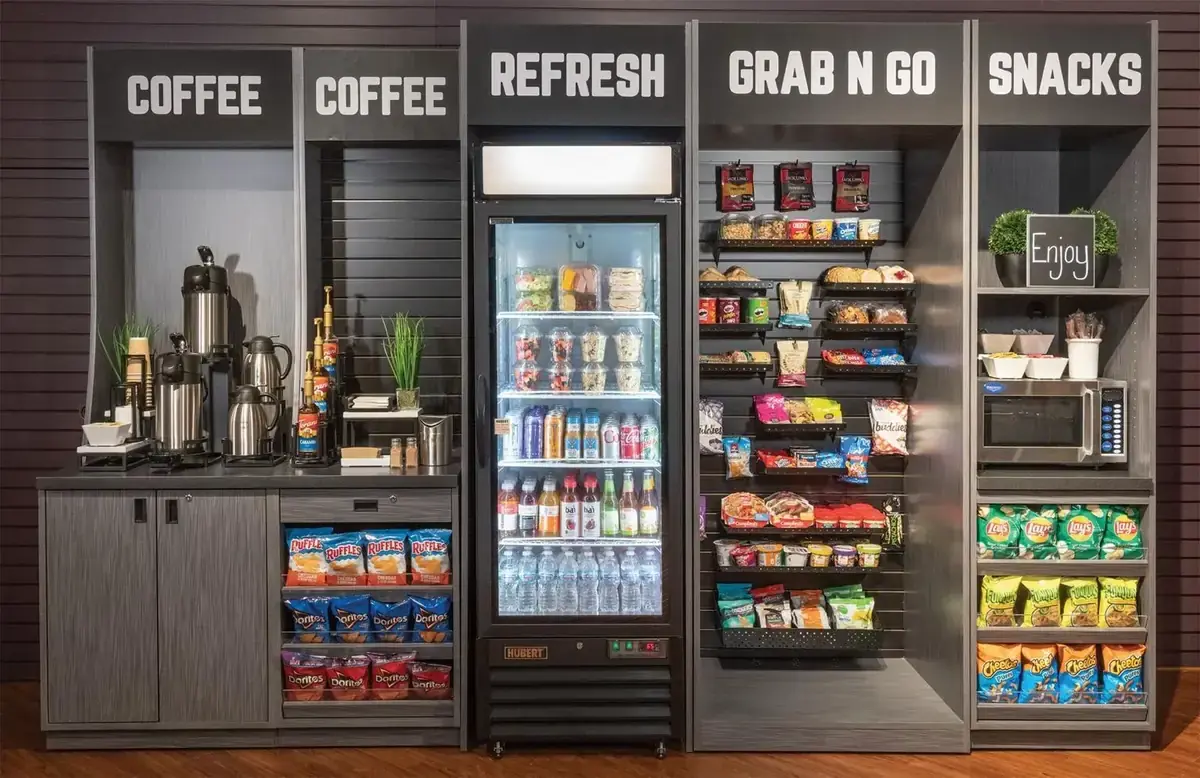
One of the most common requests I get with micro-market installations is "can we add coffee?" The answer is yes, and it makes a lot of sense because the coffee station becomes part of the market space, creating a natural hub.
Coffee Options for Micro-Markets:
| Coffee Type | Best For | Space Needed |
|---|---|---|
| Bean-to-cup machine | Offices valuing premium coffee | Countertop space + water line |
| Single-serve pod (Keurig-style) | Diverse preferences, simple operation | Countertop space |
| Cold brew and bottled coffee | Supplement to other coffee options | Cooler shelf space |
| Traditional brewer | High-volume, simple tastes | Countertop space |
Integration Tips:
- Place the coffee station at one end of the micro-market so people grabbing coffee browse the market on their way in or out
- Stock coffee-adjacent items nearby: creamers, sweeteners, biscotti, pastries
- If you have a bean-to-cup machine, feature it prominently. It becomes a draw that pulls people to the market
A corporate campus in Schaumburg was one of our bigger micro-market installations. They wanted a full market with fresh food, a freezer section for frozen meals, and an integrated coffee bar. The space was about 250 square feet in what used to be an underused conference room. We turned it into a market with two full-height coolers, a three-section shelf unit, a freezer, a self-checkout kiosk, and a bean-to-cup coffee machine on a counter near the entrance. The launch week, they had employees from other floors coming down just to see it. Three months later, it is still the most-used room in the building. The CEO told me it shows up as a highlight in every recruiting tour.
Products for a Well-Run Micro-Market
The expanded selection is the whole point of a micro-market. Here is what a well-stocked market includes:
Fresh Food (the micro-market differentiator):
Research from the International Food Information Council (IFIC) shows that a majority of consumers prioritize fresh, minimally processed food options when making purchasing decisions, which is exactly why fresh food drives micro-market success.
- Sandwiches and wraps (rotated daily or every other day)
- Salads with protein (garden, Cobb, Caesar, grain bowls)
- Breakfast items (yogurt parfaits, hard-boiled eggs, fruit cups)
- Fresh-cut fruit and vegetable packs
- Hummus, cheese, and cracker combos
Packaged Snacks:
- Traditional favorites (chips, cookies, candy bars)
- Protein bars and healthy alternatives (RXBar, KIND, Quest)
- Nuts, trail mix, and dried fruit
- Specialty and premium options
- Gluten-free, vegan, and allergen-friendly selections
Beverages:
- Full range of cold drinks (water, soda, juice, energy drinks, tea)
- Sparkling water and flavored water
- Kombucha and functional beverages
- Cold brew coffee and canned espresso
- Sports drinks and electrolyte beverages
Frozen Options (if freezer is included):
- Microwaveable meals (burritos, pasta, rice bowls)
- Frozen snacks
- Ice cream and frozen treats
- Breakfast items (frozen waffles, breakfast sandwiches)
Loss Prevention and Security
The open format of a micro-market means shrinkage (theft) is a consideration. NAMA micro-market operational standards recommend camera coverage and kiosk-based tracking as core loss prevention measures. In practice, it is rarely a significant problem in workplace environments because employees do not want to risk their jobs over a bag of chips. But the systems are in place:
- Security cameras cover the market area and record continuously
- The kiosk tracks sales data that can be cross-referenced with camera footage
- In controlled access buildings, the population is limited to employees
- Average shrinkage rates for workplace micro-markets are typically under 3% of sales, which is comparable to traditional retail
Micro-Market vs. Traditional Vending: Making the Decision
If you are debating between a micro-market and traditional vending machines, here is a straightforward comparison:
| Factor | Traditional Vending | Micro-Market |
|---|---|---|
| Space required | 3x3 feet per machine | 100-300+ square feet |
| Employee minimum | 25+ | 75+ (100+ ideal) |
| Product variety | 30-40 per machine | 200+ items |
| Fresh food | Limited | Extensive |
| Shopping experience | Select through glass | Browse openly, pick up items |
| Employee satisfaction | Good | Excellent |
| Setup complexity | Plug in, done | Custom layout and installation |
| Installation time | 1 day | 1-2 weeks planning + 1 day install |
The Bottom Line: If you have the space and the headcount, a micro-market is the superior option in every measurable way. If you do not have the space or your team is under 50 people, traditional vending is the better and more practical choice. There is no shame in a well-stocked vending machine. It serves its purpose extremely well. For a broader look at all your options, check out our workplace food options comparison.
Common Micro-Market Pitfalls to Avoid
Pitfall 1: Understocking the fresh food section. Fresh food is the primary reason people love micro-markets. If you stock two sad sandwiches and call it a day, you are wasting the format. Commit to a real fresh food selection or stick with traditional vending.
Pitfall 2: Poor traffic flow in the layout. If people have to squeeze past each other to get to the kiosk, the experience suffers. The layout needs clear paths from entrance to browsing to checkout.
Pitfall 3: Insufficient electrical planning. Finding out you need another circuit on installation day creates delays. Get the electrical assessment done during the site visit, not after equipment arrives.
Pitfall 4: Not communicating the launch. Employees will not magically discover the micro-market, especially if it is in a different location than the old vending machine. Send an email, post signs, and make the launch an event.
What It Costs (Spoiler: Nothing)
With Fast Fuel Vending, the entire micro-market setup is free.
What We Provide at No Cost:
- All fixtures and equipment (coolers, shelving, kiosk, cameras)
- Installation and setup
- Initial product inventory
- Ongoing restocking (weekly or more frequent based on volume)
- All maintenance and repairs
- Kiosk payment processing
- Equipment upgrades and replacements as needed
Your Investment:
- Space: 100+ square feet of break room or adjacent area
- Electrical: Standard outlets (we will tell you exactly what is needed during the site assessment)
- Commitment: A willingness to let us do what we do
Get Your Free Micro-Market
If you have the space and the headcount, a micro-market is the single best upgrade you can make to your workplace break room. It costs you nothing, your employees love it, and it makes your office a more attractive place to work.
Call (321) 316-0416 to schedule a free micro-market consultation and site assessment. We will design a custom market layout for your space and handle everything from there.