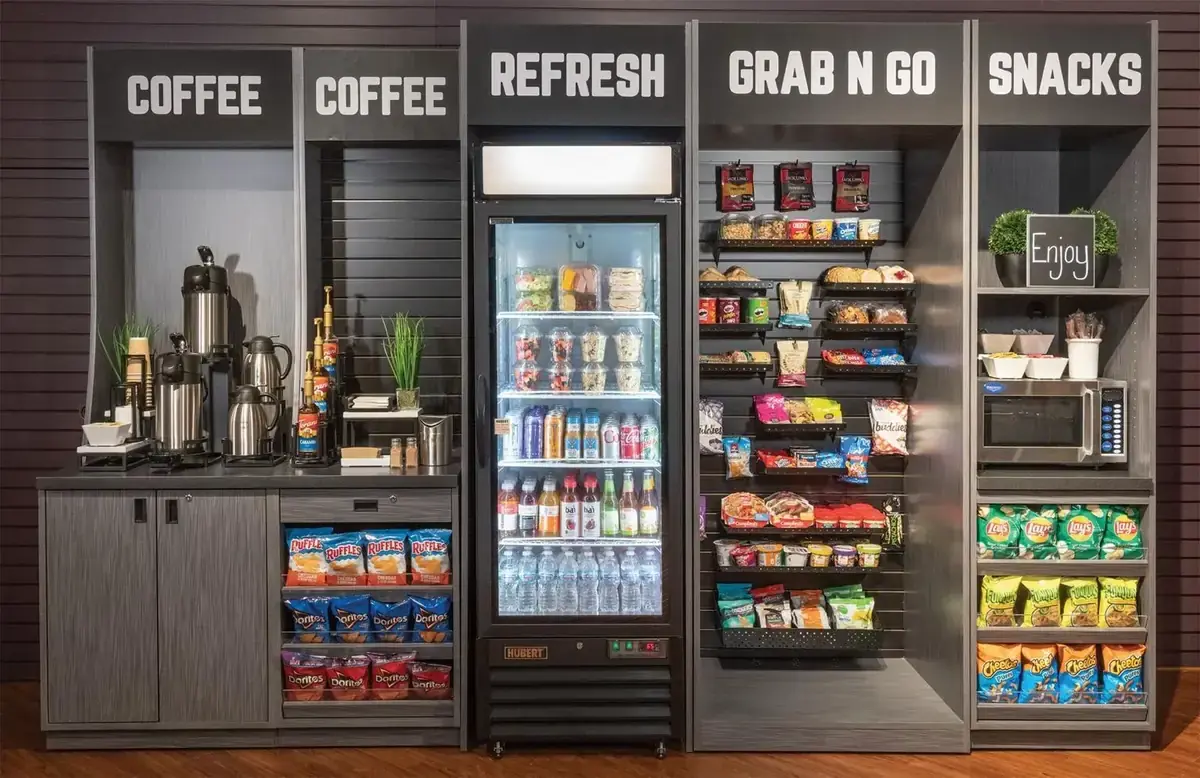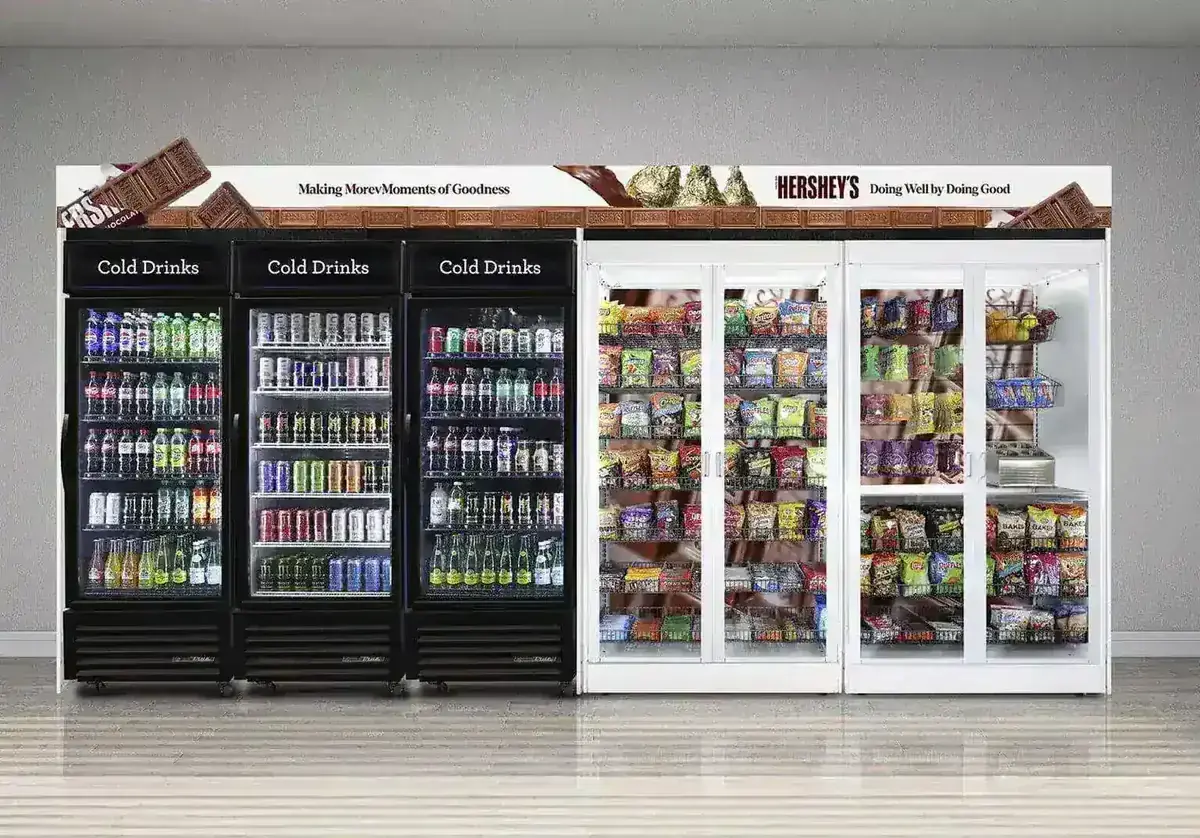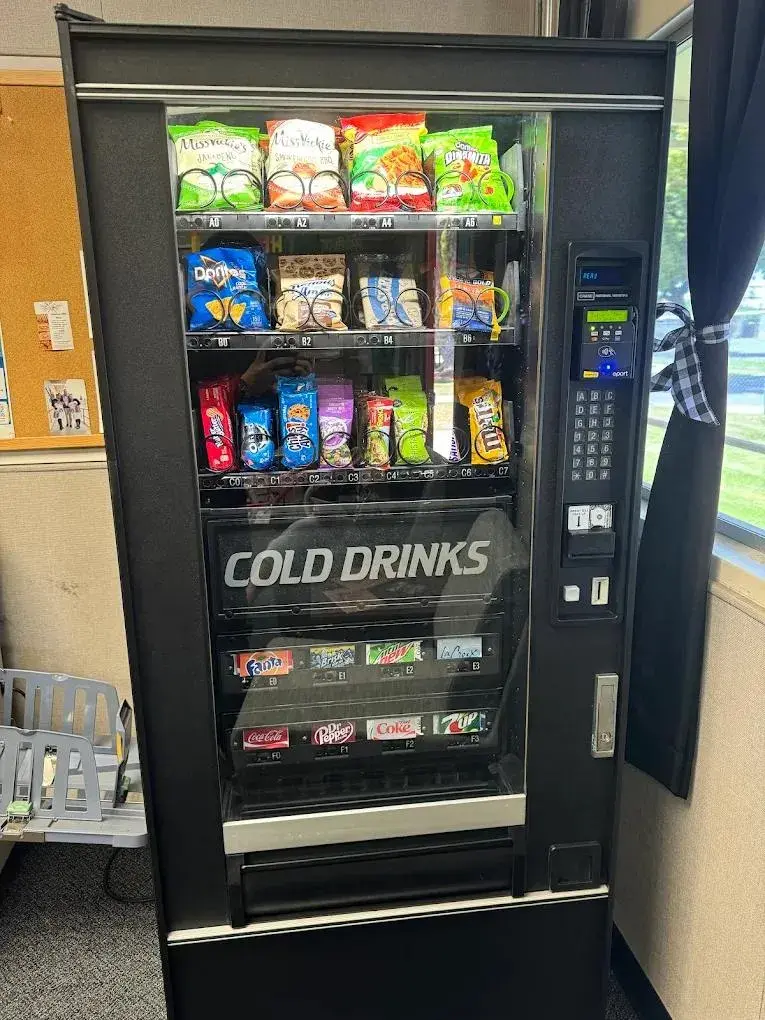
Complete Guide to Vending Machine Types
If you are trying to figure out which vending machine is right for your business, you have more options than you probably realize. The industry has moved well past the basic snack-and-soda setup. Today you can get everything from a single combo unit for a small office to a full fresh food machine stocked with salads and sandwiches. This guide walks through every major type of vending machine, what each one does well, and how to decide which one fits your specific situation.
I have installed hundreds of machines across Chicago and the suburbs, and the single biggest mistake I see businesses make is choosing the wrong machine type for their space and headcount. A machine that is perfect for a 200-person office will be completely wrong for a 30-person shop. So before you call any vending provider, read this guide and figure out what you actually need.
Snack Vending Machines
Snack machines are the classic vending workhorse. They use spiral coils to dispense bagged and packaged items, and they come in a range of sizes from compact countertop models to full-size units that hold 300+ products.
What They Carry:
- Chips, pretzels, and salty snacks from brands like Lay's, Doritos, and Cheetos
- Candy bars and chocolate (Snickers, Twix, M&Ms, Reese's)
- Cookies and pastries (Oreos, Grandma's, honey buns)
- Protein bars and healthier options (RXBar, KIND, Quest, Clif)
- Nuts, trail mix, and dried fruit
- Granola bars and breakfast items
- Gluten-free, vegan, and keto-friendly specialty items
Best For: Any workplace that wants a reliable selection of packaged snacks. A single snack machine works well for offices with 25 to 75 employees. Larger locations may need multiple machines or should consider pairing a snack machine with a beverage unit.
Modern Features: Today's snack machines come with LED lighting throughout the cabinet, cashless payment readers that accept Apple Pay, Google Pay, and tap-to-pay cards, and SureVend technology that uses infrared sensors to detect if a product actually dropped. If it did not vend, the machine automatically refunds the customer. No more lost money from stuck items.
Product Mix Strategy: I usually recommend starting with a 60/40 split between traditional favorites and healthier options, then adjusting based on sales data after the first month. Some workplaces end up at 80% healthy. Others stay closer to 50/50. The data tells you what your team actually wants.
Beverage Vending Machines
Beverage machines are purpose-built for cold drinks. They use a glass-front cooler design that lets people see exactly what is available, and they hold more drinks per square foot than a combo unit.
What They Carry:
- Soft drinks (Coca-Cola, Pepsi, Dr Pepper, and their full product families)
- Bottled water in multiple sizes (16 oz and 1 liter)
- Sparkling water and flavored water (LaCroix, Topo Chico, Spindrift)
- Energy drinks (Red Bull, Monster, Celsius, Bang, Reign)
- Sports and electrolyte drinks (Gatorade, BODYARMOR, Pedialyte Sport)
- Juice, lemonade, and iced tea
- Cold brew coffee and canned espresso drinks
- Kombucha and functional beverages
Machine Styles:
| Style | Best For | Capacity |
|---|---|---|
| Glass-front cooler | Most offices, visual appeal | 200-400 bottles/cans |
| Stack vendor (can only) | High volume, budget locations | 300-500 cans |
| Multi-select specialty | Premium environments | 150-250 bottles |
Best For: Workplaces where beverage consumption is high, particularly warehouses, gyms, construction, and offices with 50+ employees. If your team goes through a lot of water, sports drinks, or energy drinks, a dedicated beverage machine will hold more product than the drink section of a combo unit.
Combo Vending Machines
Combo machines combine snacks and beverages in a single cabinet. Snacks typically occupy the upper half while refrigerated drinks sit in the lower section.
Why They Exist: Space. Not every break room can fit two separate machines. A combo unit gives you both snacks and drinks in a footprint that is only slightly larger than a standalone snack machine.
Typical Configuration:
- 6 to 8 snack selections in the upper section
- 8 to 10 beverage slots in the lower cooler
- Total capacity of 150 to 200 products
Best For: Small offices (under 50 employees), satellite offices, apartment amenity rooms, small warehouses, and retail back rooms. Anywhere you want both snacks and drinks but only have room for one machine.
Trade-offs: The compromise is variety. A combo machine holds roughly half the snack selection of a dedicated snack machine and half the beverage selection of a dedicated drink machine. You are giving up variety for convenience. For most small locations, that is the right trade. For larger offices, separate machines are the better call.
I installed a combo machine at a property management company in River North last year. They had about 35 employees and a break room that was basically a converted closet. There was no way two machines would fit. The combo unit gave them a solid mix of 15 snack options and 10 beverage options in a single machine. Their office manager told me it was the most popular thing in the office within a week. When space is tight, combo machines are the answer.
Fresh Food Vending Machines
Fresh food machines are temperature-controlled units designed to safely store and dispense perishable items. They are a step up from traditional vending and a step below a full micro-market.
What They Carry:
- Sandwiches and wraps (turkey club, chicken Caesar, veggie hummus)
- Salads (garden, Cobb, Mediterranean grain bowl, Caesar)
- Breakfast items (yogurt parfaits, hard-boiled eggs, breakfast sandwiches)
- Fresh fruit cups and vegetable packs with dip
- Hummus and pita kits, cheese and cracker combos
- Microwaveable meals for locations with a break room microwave
Food Safety: Modern fresh food machines maintain precise refrigeration temperatures with digital monitoring. Every item has a clear expiration date, and we follow strict FIFO (First In, First Out) rotation during restocking. Items that approach their sell-by date are removed and replaced. The food safety standards are comparable to what you would find in a convenience store cooler.
Best For: Offices with 75+ employees where people want real meal options, not just snacks. Also excellent for 24/7 operations like warehouses, hospitals, and call centers where the cafeteria closes but workers still need to eat. Fresh food machines work best when paired with at least one traditional snack or combo machine.
Is Fresh Food Right for Your Location?
| Factor | Good Fit | Not Ideal |
|---|---|---|
| Employee count | 75+ | Under 30 |
| Nearby restaurants | Few or none | Many options within walking distance |
| Work schedule | Multiple shifts, 24/7 | Standard 9-5 only |
| Wellness priority | High | Not a focus |
| Break room space | Adequate | Very limited |
How to Choose the Right Machine Type
Here is a decision framework I use with every new client:
Step 1: Count Your People
- Under 30 employees: Combo machine
- 30 to 75 employees: Dedicated snack machine plus beverage machine, or a combo if space is tight
- 75 to 150 employees: Snack, beverage, and consider fresh food
- 150+ employees: Multiple machines or explore a micro-market
Step 2: Assess Your Space
- One machine footprint (about 3 feet wide by 3 feet deep): Combo
- Two machine footprints: Separate snack and beverage
- Larger break room area: Multiple machines or micro-market
Step 3: Consider Your Workforce
- Desk workers: Standard snack and beverage mix
- Physical labor: Heavy on hydration and protein, consider larger portions
- Health-conscious culture: Emphasize healthy options across all machines
- Multiple shifts: Ensure high capacity to last between restocking visits
Step 4: Think About Meals vs. Snacks
If people need actual meals (not just snacks between meals), you need either fresh food vending or a micro-market. Snack and beverage machines alone will not satisfy workers who need lunch or dinner during a shift.
Product Selection Across Machine Types
No matter which machine type you choose, the product mix is what makes or breaks the experience. Here is how I think about stocking each type:
The 80/20 Rule: Stock 80% proven performers (the items that sell consistently at nearly every location) and 20% variety items (new products, requested items, seasonal options). This keeps the core selection reliable while giving people something new to try.
Seasonal Rotation: Swap products with the seasons. More cold beverages and lighter snacks in summer. Comfort foods, hot chocolate, and heartier options in winter. Fall gets pumpkin and apple flavors. Spring gets lighter, fresher selections.
Listen to Your People: The best product selection is the one your employees actually want. We track sales data on every machine and adjust the mix based on what is moving and what is sitting. A product that sells 30 units a week at one location might sell 3 at another. Data, not guesswork, should drive decisions.
Machine Dimensions and Space Planning
Before you commit to a machine type, you need to know if it will physically fit in your space. Here are the standard dimensions for each type:
Snack Machine: Approximately 72 inches tall, 39 inches wide, 35 inches deep. Weight fully loaded: 600 to 800 lbs. Requires at least 5 feet of clearance in front for comfortable use and service access.
Beverage Machine: Approximately 72 inches tall, 36 inches wide, 33 inches deep. Weight fully loaded: 700 to 900 lbs. Glass-front models need clearance for the door to open during servicing.
Combo Machine: Approximately 72 inches tall, 39 inches wide, 34 inches deep. Slightly wider than a standalone snack machine but eliminates the need for a second unit.
Fresh Food Machine: Similar to a beverage machine in size, with additional insulation for precise temperature control.
Key Space Requirements:
- A standard 120V outlet within 6 feet (no extension cords on commercial equipment)
- 4 inches of clearance behind the machine for ventilation
- Level, solid flooring that can support the loaded weight
- Enough width to get the machine through all doors and hallways during delivery. Measure your narrowest doorway.
What to Expect from a Modern Vending Machine
If you have not looked at vending machines recently, the technology has changed dramatically:
- Cashless payment is standard. Every machine should accept Apple Pay, Google Pay, and tap-to-pay credit/debit cards.
- LED lighting makes products visible and the machine look professional in any break room.
- Energy-efficient cooling keeps operating costs low (a few dollars per month for electricity).
- Remote monitoring lets the vending company see inventory levels and machine status in real time.
- SureVend technology detects jams and automatically refunds customers.
- ADA-compliant designs ensure accessibility for all employees.
- Touchscreen displays on select models show product details, nutritional information, and even promotional content.
- Energy Star certification on newer models ensures you are running equipment that meets efficiency standards.
Common Mistakes When Choosing a Machine Type
After helping hundreds of businesses pick the right machine, here are the errors I see most often:
Mistake 1: Getting a combo when you need two machines. If your team has 60+ people, a combo machine will run out of popular items too quickly between restocking visits. Spend the extra floor space on separate units.
Mistake 2: Skipping beverage vending. Some businesses think they only need snacks because they already have a water cooler. But employees want variety in their drinks. Energy drinks, sparkling water, and cold coffee are in high demand. A dedicated beverage machine consistently outsells a snack-only setup.
Mistake 3: Ignoring fresh food for 24/7 operations. If your employees work overnight shifts and the cafeteria is closed, snacks alone will not cut it. Workers need real food. A fresh food machine or micro-market solves this problem.
Mistake 4: Placing the machine in a low-traffic area. Even the best machine with the perfect product mix will underperform if nobody walks past it. Visibility drives usage.
Get the Right Machine for Your Space
Not sure which type is the best fit? That is exactly what a free site assessment is for. At Fast Fuel Vending, I will walk through your space, ask about your team, and recommend the setup that makes the most sense. No pressure, no obligation.
Call (321) 316-0416 to schedule your free consultation and get the right vending solution for your workplace.