The Complete Guide to Choosing the Right Vending Machine for Your Chicago Business
Getting a vending machine for your Chicago business is a great decision. But there is more to it than just calling a vending company and saying "send me a machine." The type of machine, the size, the product mix, where you place it, and which provider you work with all affect whether vending becomes a valued workplace amenity or just a dusty box in the corner that nobody uses.
In this guide, I will cover everything you need to know: the different types of machines available, how to match machine size to your employee count, product selection strategy, where to place the machine for maximum usage, questions you should ask any vending provider, and red flags that signal you should keep looking.
Understanding Vending Machine Types
Not all vending machines are the same. For a comprehensive overview, check out our complete guide to vending machine types. Here is a breakdown of the main types and what each one does best:
Snack Machines
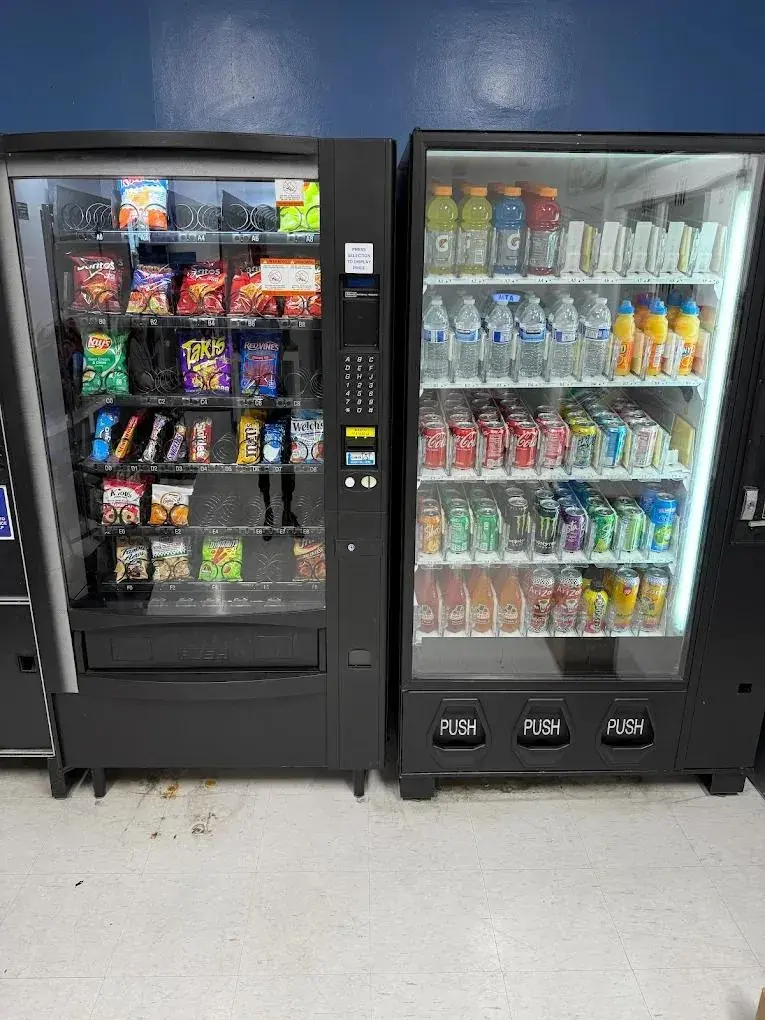
These are the classic vending machines with coil-based dispensing. They hold chips, candy bars, cookies, crackers, granola bars, protein bars, nuts, and other packaged snacks. A standard snack machine has 30-40 slots and can hold several hundred items total. Best for offices that primarily want grab-and-go snack options.
Beverage Machines
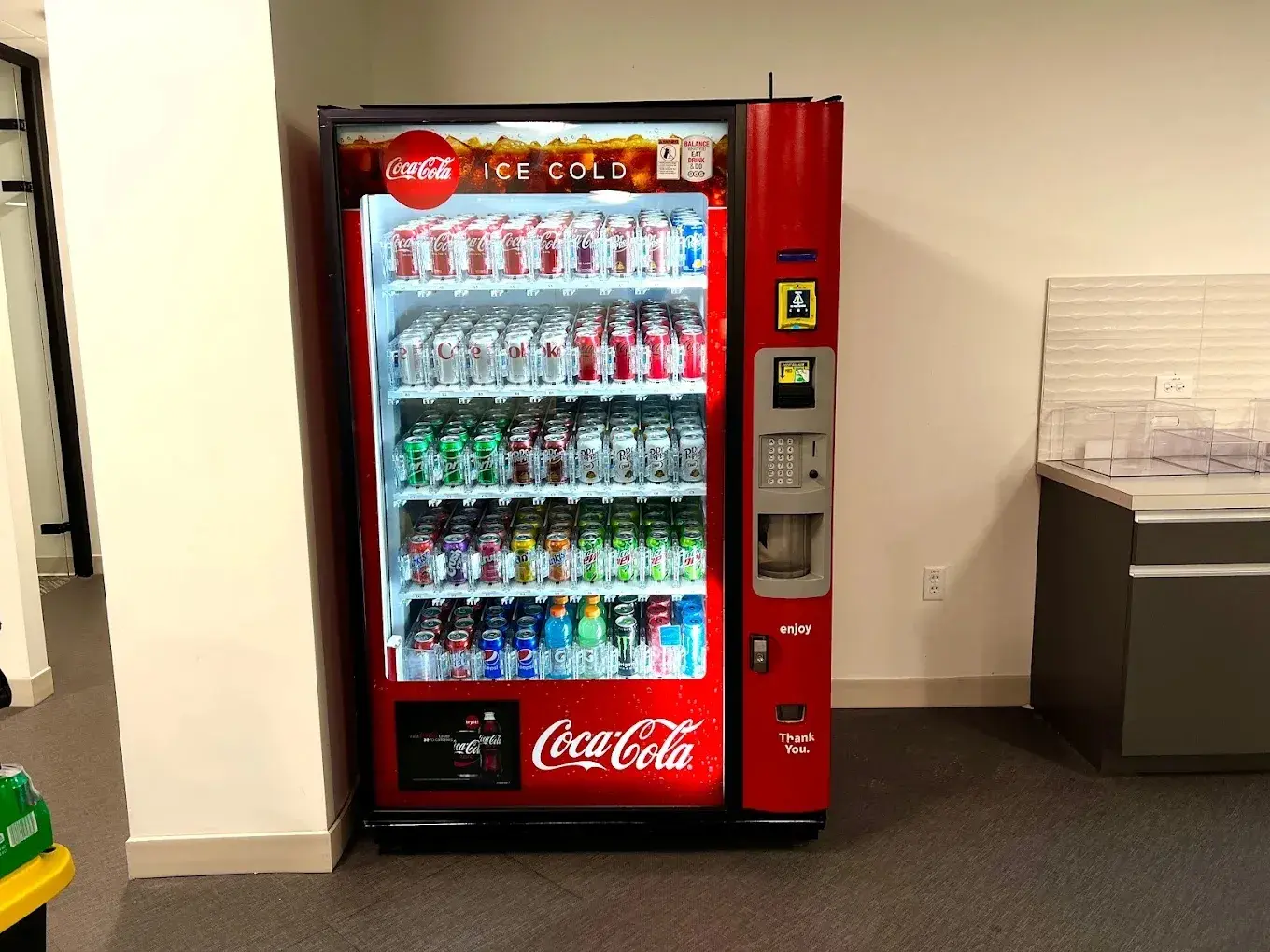
Dedicated cold drink machines with a vertical rack system. They hold canned and bottled beverages: sodas, water, juice, energy drinks, sports drinks, tea, and sparkling water. A standard beverage machine holds 200-300 bottles or cans across 8-10 selections. Best paired with a snack machine for a complete break room setup.
Combo Machines
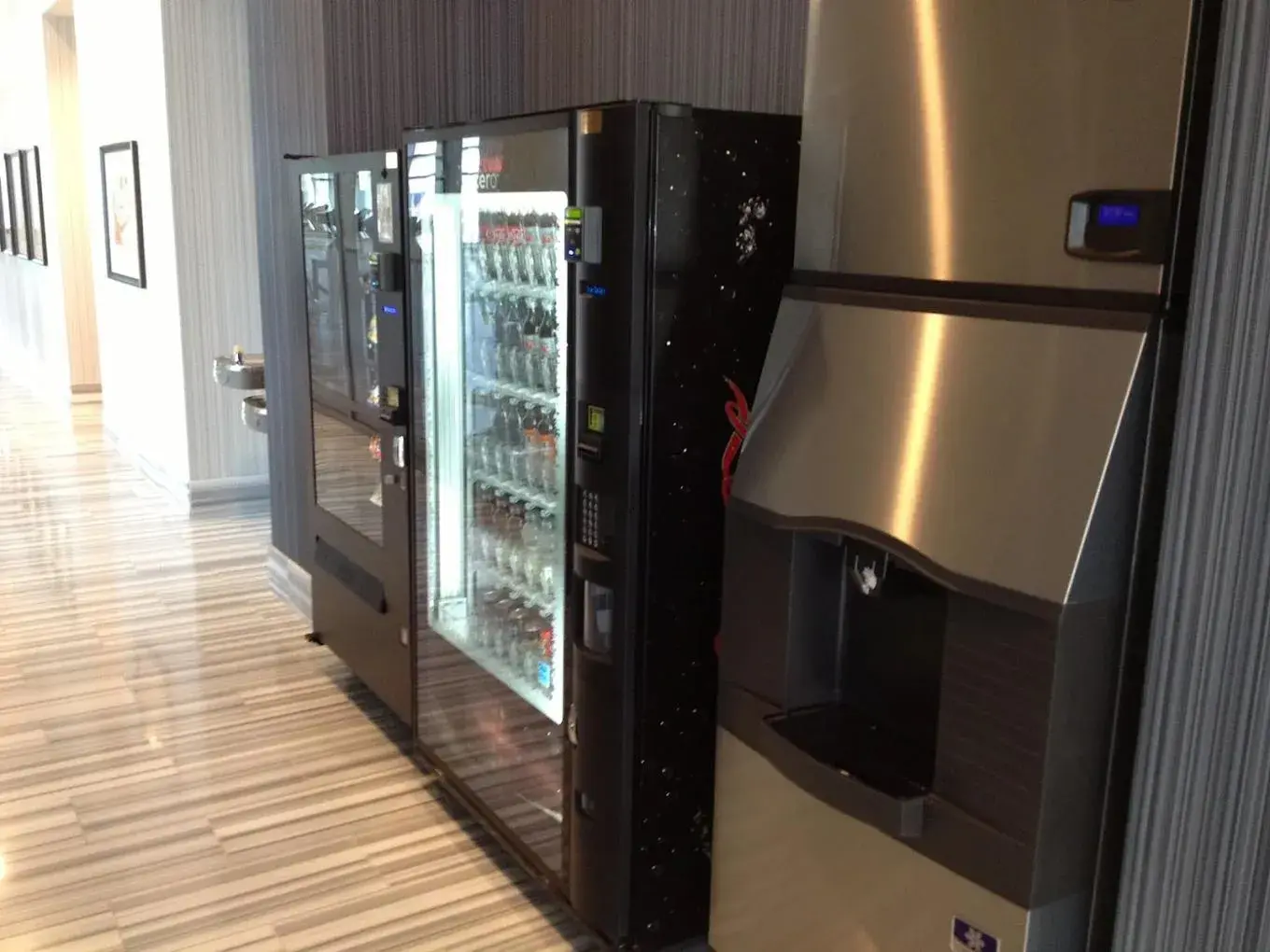
These combine snacks and beverages in a single unit. The top half dispenses snacks via coils, and the bottom half holds cold drinks. Combo machines are a great space-saving option when you do not have room for two separate machines. They typically hold 20-25 snack selections and 6-8 beverage selections. Best for smaller offices or secondary break room locations.
Glass-Front Machines
Premium machines with a large glass front panel that lets employees see every product clearly. These look more polished and professional than traditional machines with small windows. The full visibility encourages purchases because people can see exactly what is available. Best for offices that care about break room aesthetics.
Fresh Food and Refrigerated Machines
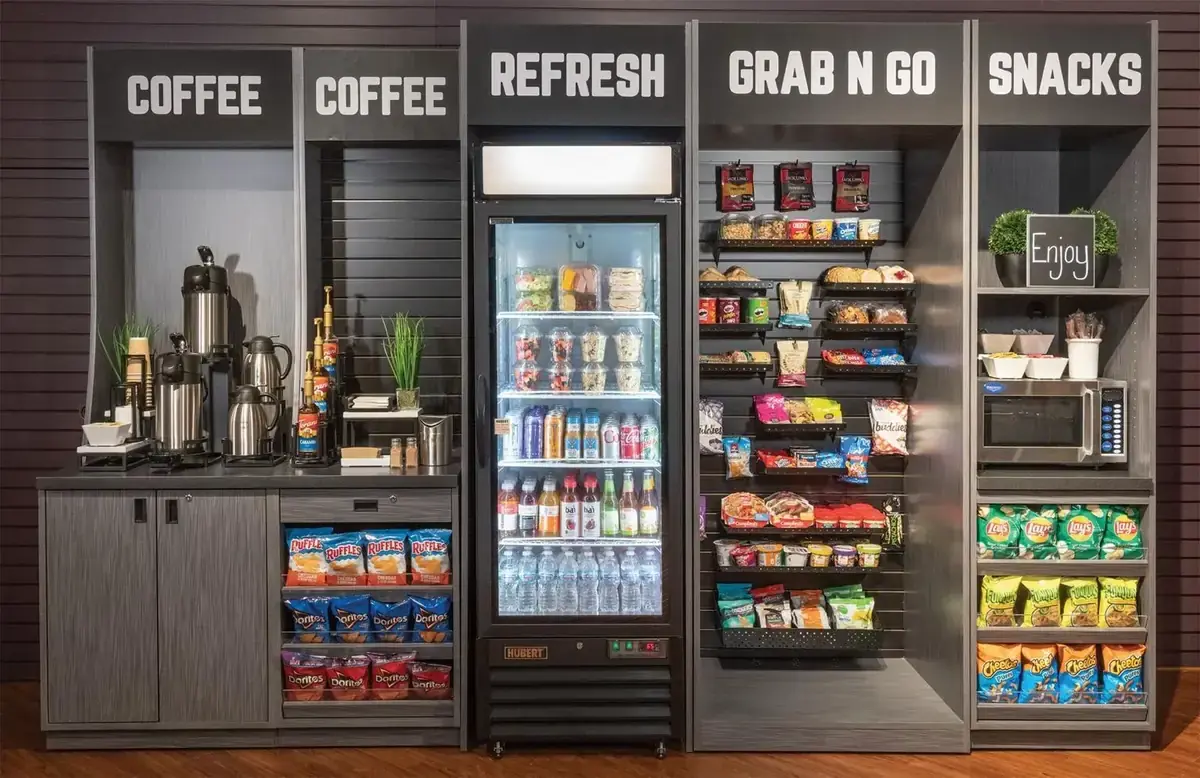
Specialized machines that maintain refrigerated temperatures for perishable items like sandwiches, salads, yogurt, fruit cups, and ready-to-eat meals. These require more frequent restocking and careful temperature monitoring. Best for offices with 75+ employees where people want real meal options, not just snacks. For offices with enough space, a full micro-market setup offers even more fresh food variety.
Coffee Vending Machines
Bean-to-cup machines that grind fresh coffee and dispense espresso, lattes, cappuccinos, hot chocolate, and tea. These are increasingly popular in offices as an alternative to traditional coffee makers. Best for offices that go through a lot of coffee and want a variety of options beyond basic drip.
Size Guide: Matching Machines to Your Employee Count
Statista estimates the U.S. vending machine industry at over $9 billion in market size, with workplace locations accounting for the largest share of installations. The number of employees at your location is the single most important factor in choosing the right setup. Here is a practical guide:
| Employee Count | Recommended Setup | Why |
|---|---|---|
| 25-40 | 1 combo machine | Lower volume, space-efficient, covers both snacks and drinks |
| 40-75 | 1 snack + 1 beverage machine | Enough volume to justify two machines, better product variety |
| 75-125 | 1 snack + 1 beverage + optional coffee | High enough usage for full selection, coffee is a popular add-on |
| 125-200 | 2 snack + 1 beverage + coffee, or micro-market | Consider a micro-market at this size for fresh food options |
| 200+ | Micro-market + satellite vending machines | Main break room gets a full market, secondary areas get machines |
These are guidelines, not hard rules. A highly engaged office of 30 people might justify two machines, while a warehouse of 100 with a short lunch break might be better served by machines closer to the work floor. Your vending provider should help you find the right fit.
A good example of this is a property management company in Schaumburg that called me wanting "a vending machine" for their buildings. Simple enough request, except they managed three separate buildings and each one had completely different needs. I did site assessments at all three locations in the same afternoon. The first building was a small professional office with about 35 people, so I recommended a single combo machine. It covered snacks and drinks without taking up much break room space. The second building was larger, around 90 employees across two floors, so I suggested a dedicated snack machine paired with a beverage machine to give them real variety. The third building was the biggest, over 200 employees with a large cafeteria-style break room, and I recommended a full micro-market with open shelving and a self-checkout kiosk. The property manager told me she appreciated that I did not just try to sell the same solution three times. Each location got exactly what made sense for its size and setup. That is why the site assessment matters so much. "A vending machine" is not one-size-fits-all, and the right answer depends entirely on the space and the people using it.
Product Selection Strategy
What goes inside the machine matters just as much as the machine itself. Here is how to think about product selection:
Start with the data you have. If you already have a vending machine, look at what sells and what does not. If you are starting fresh, survey your team. Even a simple email asking "what snacks and drinks would you want in a vending machine?" gives you useful direction.
Balance familiar favorites with better-for-you options. Every machine needs crowd-pleasers like Doritos, Snickers, and Coca-Cola. But pair them with healthier alternatives like protein bars, sparkling water, and baked chips. The 80/20 rule (80% healthier options, 20% indulgent) works well for most offices.
Consider your workforce. A tech startup with employees in their 20s and 30s will want different products than a manufacturing facility with physically demanding work. Office workers tend to reach for lighter snacks and flavored water. Warehouse workers often prefer heartier options like trail mix, beef jerky, and energy drinks.
Rotate regularly. Ask your vending provider to swap in new products every few weeks. Keeping the selection fresh encourages continued usage and gives employees something to look forward to. For more on stocking strategy, see our vending operations guide.
Do not forget beverages. Water is always the top seller, but variety matters. Stock a mix of water, sparkling water, energy drinks, sports drinks, juice, and soda. Cold brew coffee and tea are gaining popularity fast.
Smart Placement: The Golden Rules
Where you put the machine matters just as much as what goes in it. Strategic placement can dramatically increase usage and employee satisfaction.
Rule 1: High Traffic Areas
According to NAMA, vending machine placement in high-traffic areas is the single biggest factor in driving sales volume, with well-placed machines generating significantly more revenue than identical machines in low-visibility locations. Place machines where employees naturally congregate or pass through:
- Near break rooms and kitchens
- Close to main entrances and exits
- Adjacent to conference room clusters
- By elevator banks in multi-floor offices
Rule 2: Accessibility Over Visibility
A slightly hidden machine that is convenient beats a visible machine that is out of the way. Employees will find it. Prioritize ease of access over a prominent display location.
Rule 3: Consider the Impulse Factor
People are more likely to grab a snack when:
- They are already standing (near copy machines, mailrooms)
- They are transitioning between tasks
- They see others using the machine
Placement Recommendations by Workplace Type
For Corporate Offices:
The ideal spot is typically adjacent to the main break room but not inside it. This allows:
- Access without entering a potentially full break room
- Use during informal meeting breaks
- 24/7 availability even if break room has limited hours
For Warehouses and Manufacturing:
Consider multiple smaller machines instead of one large unit:
- One near the employee entrance for arriving and departing workers
- One in or near the main break area for lunch and break time
- One accessible from the production floor for quick access during shifts
For Multi-Tenant Buildings:
Lobby placement works well when:
- All tenants have agreed to share the machine
- Building security is adequate
- The machine serves 100+ daily passers-by
Technical Considerations
Electrical Requirements:
- Standard 120V outlet (dedicated circuit preferred)
- Within 6 feet of machine location
- No extension cords
Floor Requirements:
- Level surface (can adjust slightly with machine legs)
- Solid flooring (not carpet for refrigerated units)
- Can support 600-800 lbs when fully stocked
Clearance Needs:
- 4+ inches behind for ventilation
- 2-3 feet in front for customer space
- Door swing clearance for restocking
Climate Considerations for Chicago
Chicago's temperature extremes matter for vending:
Avoid placing machines:
- Near loading docks with temperature swings
- In unheated areas during winter
- In direct sunlight near windows
Ideal conditions:
- Climate-controlled interior spaces
- 60-80°F ambient temperature
- Away from heat sources (boilers, kitchens)
Questions to Ask Any Vending Provider
Before you sign anything or shake hands on a deal, ask these questions. A good provider will answer them directly and honestly. A bad one will dodge or give vague responses.
1. "Is the machine, installation, and service really free? Are there any fees at all?" The answer should be a clear yes to free and no to fees. If they mention setup charges, delivery fees, or monthly minimums, keep looking.
2. "How often will you restock?" Weekly or bi-weekly is standard. If they say "when you call us," that is a red flag. You should not have to manage their restocking schedule.
3. "Can we customize the product selection?" The answer should be yes. If they say "we stock what we stock," they are not a full-service partner.
4. "What happens if the machine breaks?" Look for a guaranteed response time (24-48 hours is reasonable). Ask if they have technicians in the Chicagoland area or if they are dispatching from out of state.
5. "Do the machines have cashless payment?" In 2026, any machine without cashless payment is outdated. Apple Pay, Google Pay, and tap-to-pay should be standard.
6. "Do the machines have guaranteed vend technology?" SureVend or equivalent technology detects when a product gets stuck and automatically refunds the customer. This is important for employee satisfaction.
7. "How long is the contract? Can we cancel?" Flexible terms are better. Long-term contracts with early termination penalties are a sign that the company is more focused on locking you in than earning your business.
8. "Can you provide references from other local businesses?" Any reputable company should be happy to connect you with existing clients who can vouch for their service.
9. "Who do we call if there is an issue? Do we get a dedicated contact?" A local company with a direct phone number beats a national chain with a 1-800 call center.
10. "Will you do a free site assessment before installation?" A good provider wants to see your space before committing. This ensures the right machine, the right placement, and the right product mix from day one.
Red Flags to Watch For
Not all vending companies operate with your best interests in mind. Here are warning signs that should make you pause:
- No site visit before installation. If they want to drop a machine without seeing your space, they are not planning for your success.
- Outdated equipment. Cash-only machines, dim lighting, no glass front. These are signs of a company that is not reinvesting in their equipment.
- Vague restocking commitments. "We will come when the machine needs it" is not a plan. Look for a defined schedule.
- Long-term contracts with penalties. A confident provider does not need to lock you in. Their service should be good enough that you want to stay.
- No local presence. A company dispatching from far away will have slower response times and less accountability.
- Pushy sales tactics. If they are pressuring you to sign today or offering a "limited time deal," that is a sales tactic, not good service.
- No willingness to customize products. If they insist on stocking whatever they want with no input from you, your employees will end up with products nobody asked for.
- No cashless payment. This is a baseline feature in 2026. If they cannot offer it, their equipment is behind the times.
Vendor Evaluation Checklist
Use this checklist when comparing vending providers for your Chicago business:
- [ ] Machines provided at zero cost (no lease, no rental, no setup fee)
- [ ] Modern equipment with cashless payment (Apple Pay, Google Pay, tap-to-pay)
- [ ] Guaranteed vend technology (SureVend or equivalent)
- [ ] Glass-front machines with LED lighting
- [ ] Customizable product selection based on your preferences
- [ ] Defined restocking schedule (weekly or bi-weekly)
- [ ] Local Chicagoland presence with fast response times
- [ ] No long-term contract or easy cancellation terms
- [ ] Free site assessment before installation
- [ ] Willing to provide references from current clients
- [ ] Dedicated contact person (not just a call center)
- [ ] Healthy and traditional product options available
- [ ] Remote monitoring for proactive maintenance
- [ ] ADA-compliant machine design
Let Us Help You Choose
Not sure about the best machine type, placement, or product mix? Fast Fuel Vending provides free site assessments for Chicago businesses. Our team will:
1. Visit your location and walk through your space
2. Evaluate employee traffic patterns and break room layout
3. Check electrical and space requirements
4. Recommend the right machine type and size for your headcount
5. Propose a customized product mix based on your team
6. Handle all delivery and installation details
We are a local Chicago vending company. When you call us, you talk to a real person who will be your point of contact for the life of the service. No call centers, no runaround.
Schedule your free assessment today: (321) 316-0416